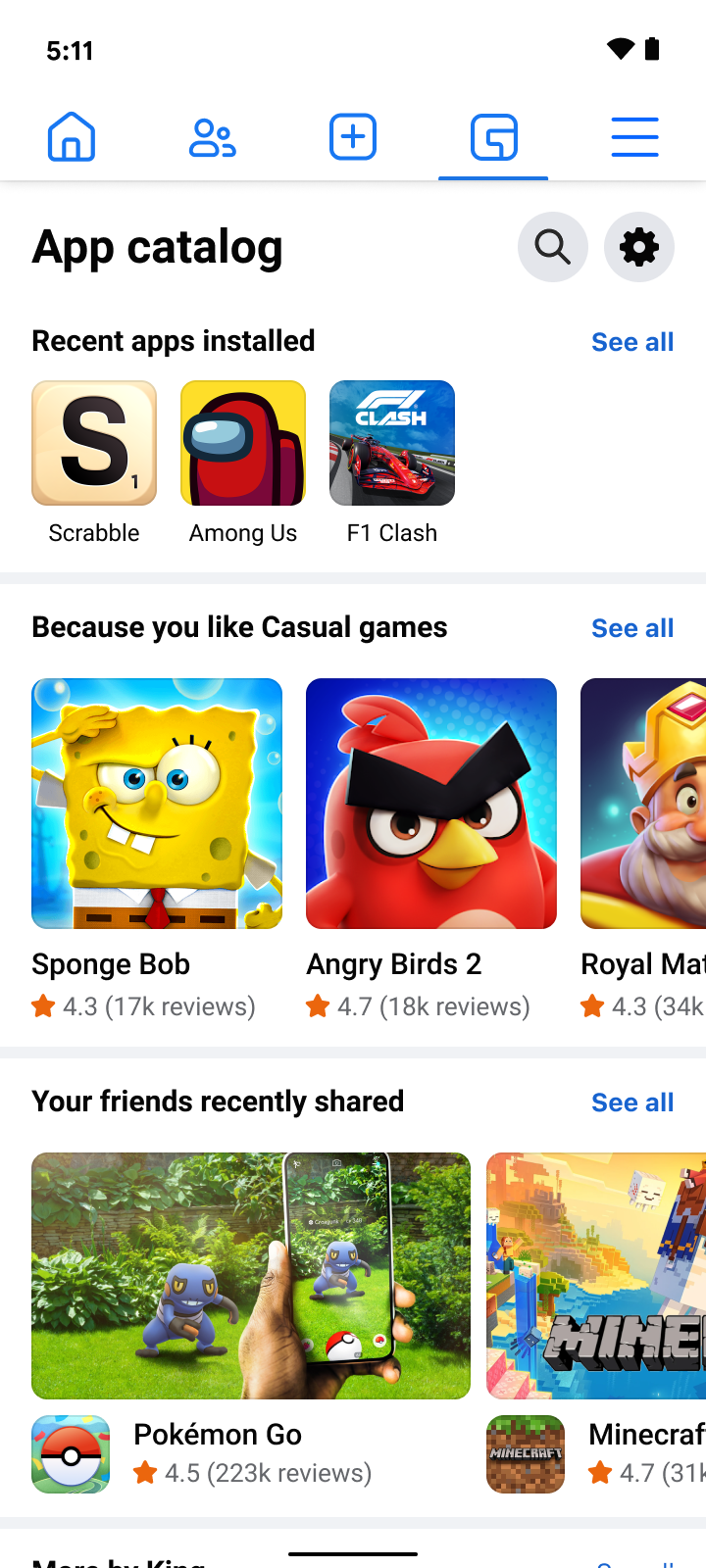
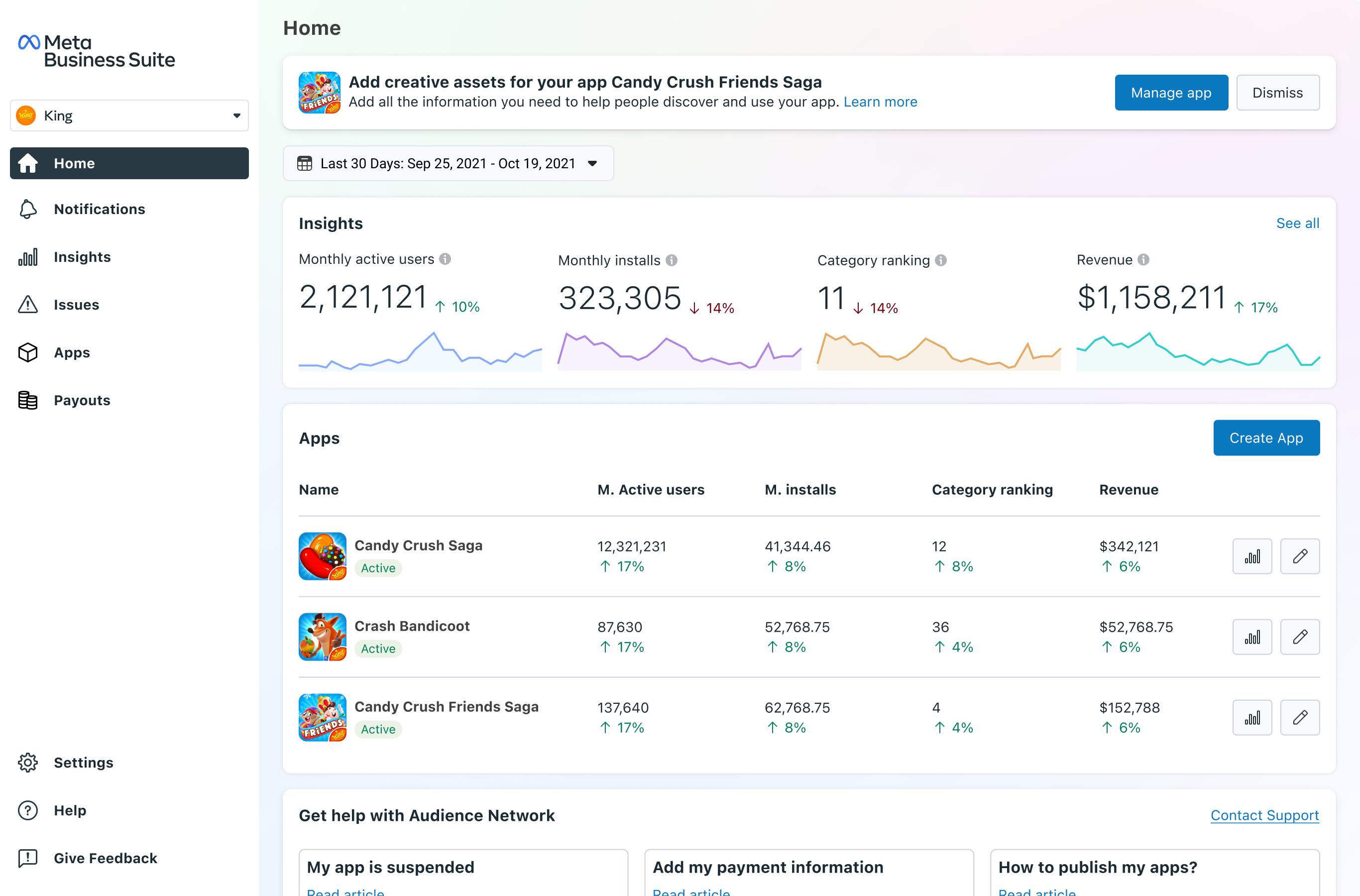
Building Meta's path to becoming an app distribution ecosystem
Designed Meta's first branded app install experience, driving cost per install as low as 0.75x Google's and laying the groundwork for Meta to become an app distribution ecosystem in its own right.
 Full case study during interviews only
Apple's iOS 14 changes already cut off signal Meta relied on for personalized app ads. To avoid the same exposure on Android if Google made similar changes, and to spare developers the 30% store tax, we started testing growth app stores as an alternative to Google Play.
We first partnered with Samsung Galaxy Store and linked users to their own App Install Sheet on Facebook. But the experience fell short in two key ways.

Users didn't know growth app stores even existed, and the experience didn't look like anything they recognized, making it hard to trust.

The install sheet didn't give users enough to make an informed decision. Samsung cost per install ran 2.3x higher than Google.
I proposed a different approach: rebuild the Install Sheet using Meta's own design system, rather than Samsung's.
The pitch was simple: a native-feeling experience would build more trust, give us control over what users see, and generate more signal for personalized ads. Samsung agreed to test it.
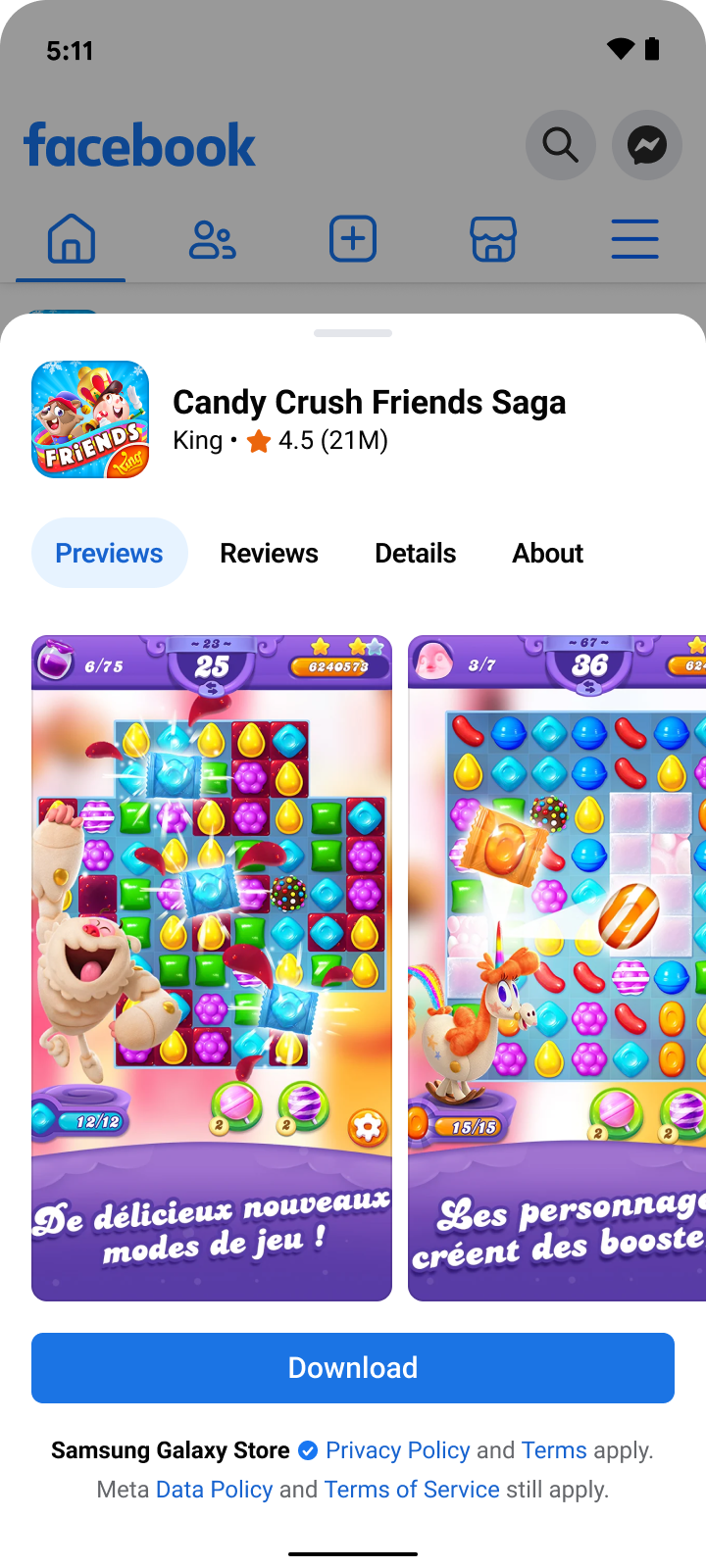
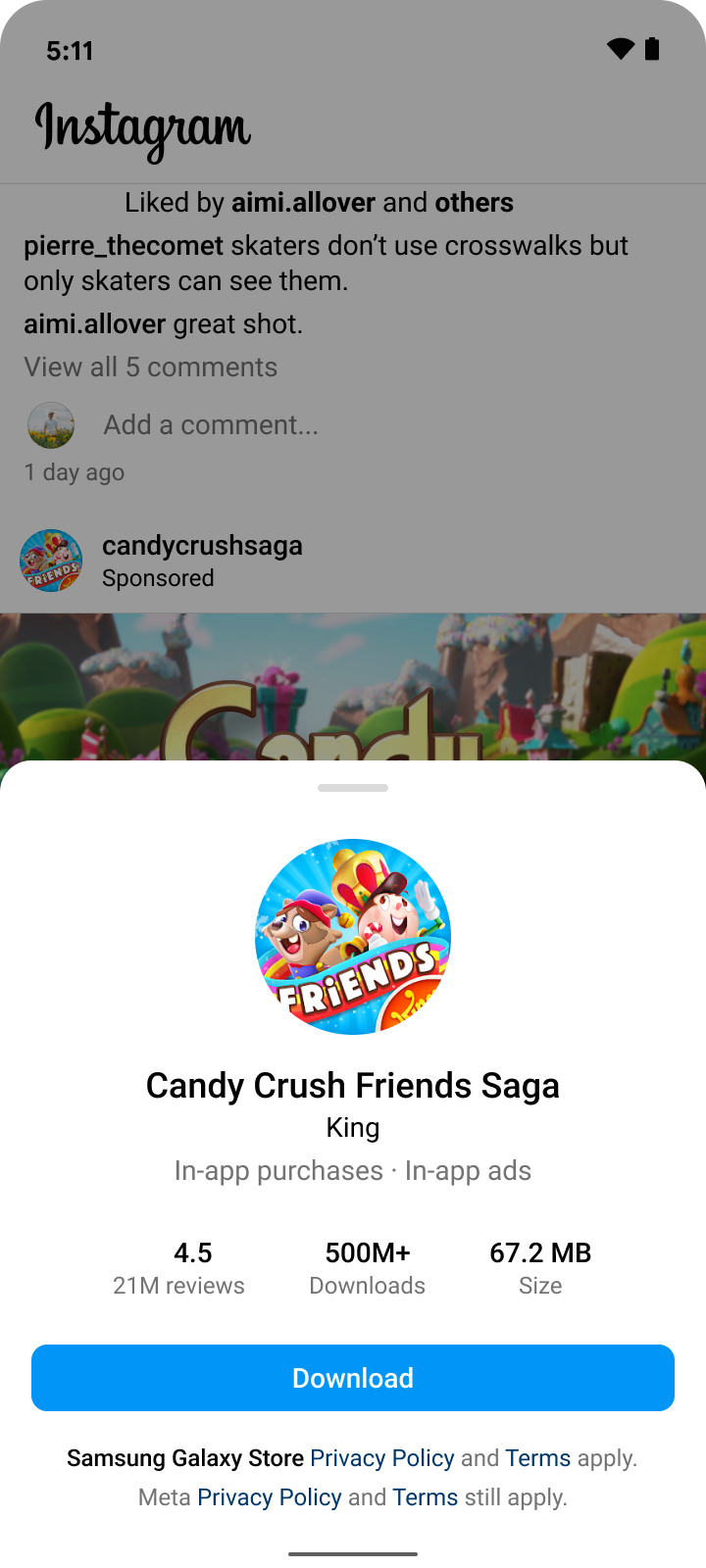
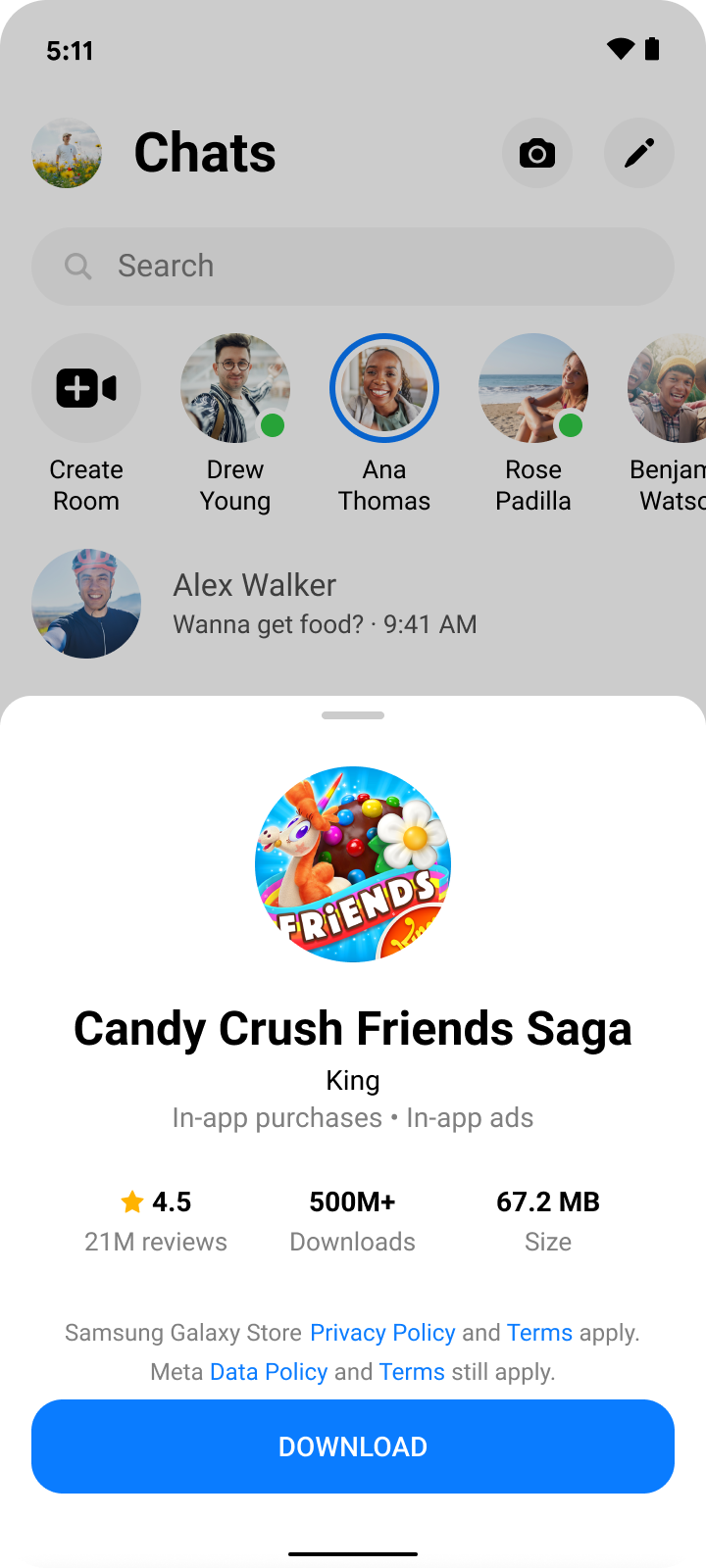
A few iterations later, the Meta App Install Sheet saw its cost per install as low as 0.75x Google's. This result enabled us to add it on Instagram and Messenger, in close collaboration with their design system and ad teams. We could also partner with new growth app stores such as Oppo and Xiaomi.
I handed over the AIS and turned to the long term vision: Meta as the number one destination to discover, download, and share apps, an ecosystem that's natural and engaging for people and developers alike. As market regulations opened up, that vision sharpened into something bigger: Meta distributing apps directly.